As industries move toward eco-friendly production and low-carbon manufacturing, one key question continues to emerge:
Which metal forming process offers the best balance between efficiency, cost, and sustainability?
Among the various methods available today, cold roll forming stands out as a highly efficient and environmentally responsible solution. However, despite its advantages, it is often overlooked in sustainability discussions.
Understanding Cold Roll Forming
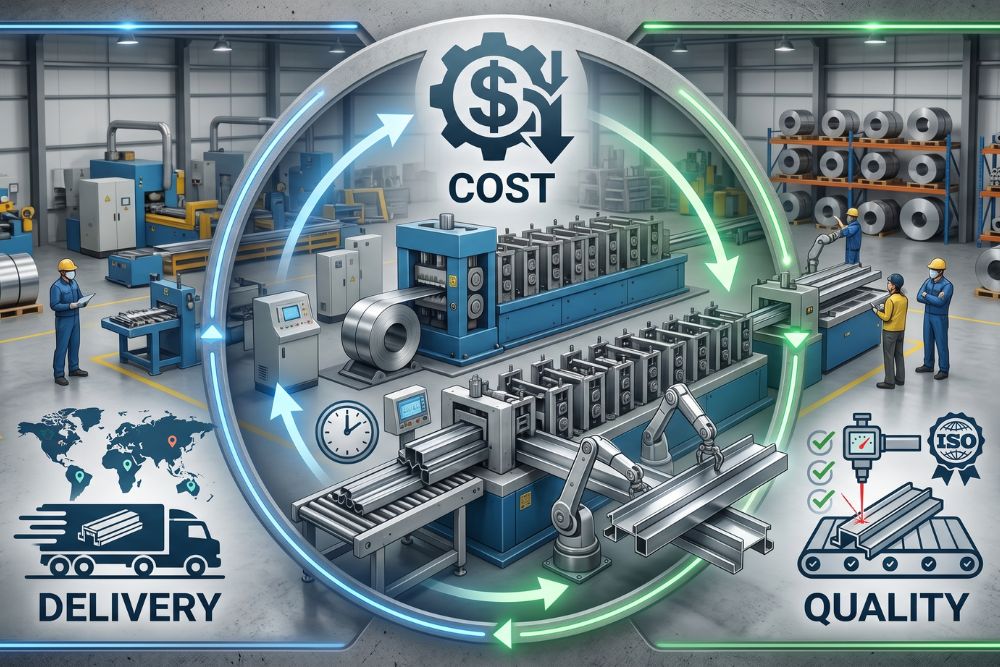
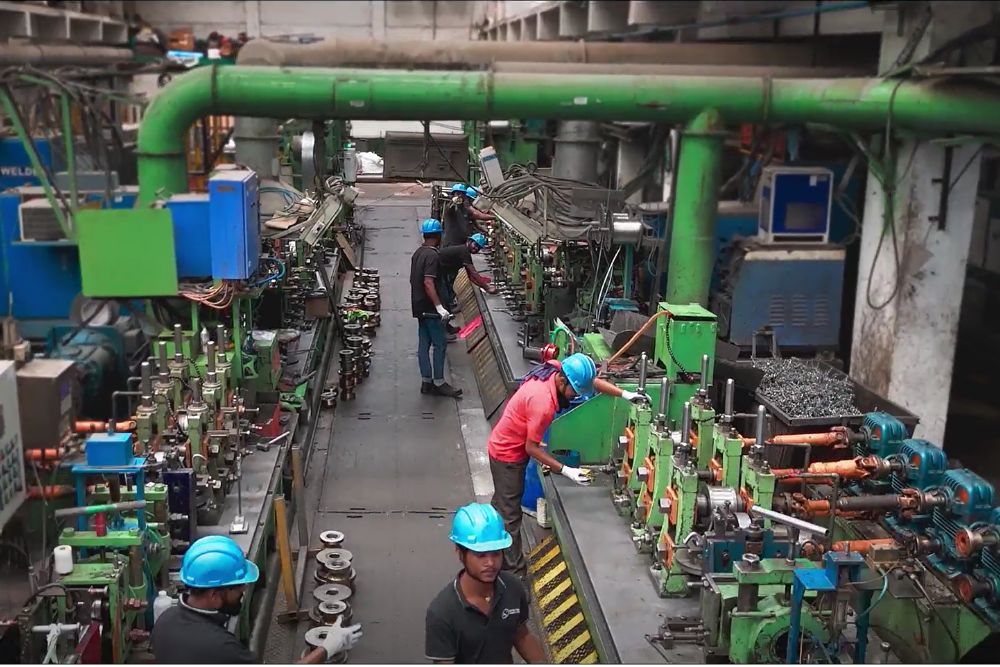
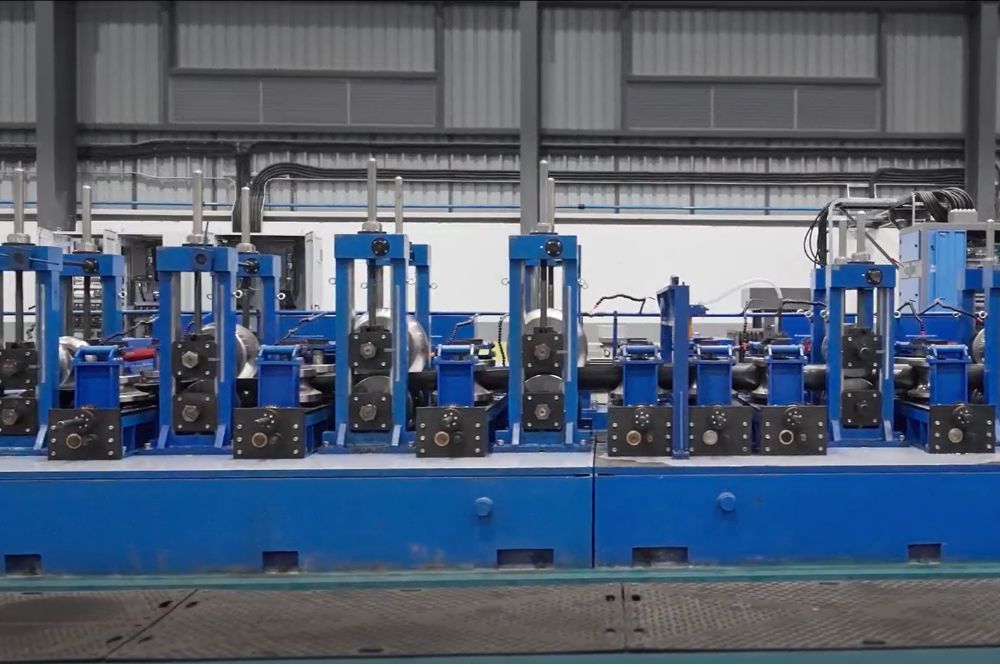
Cold roll forming is a continuous metal shaping process where sheet metal is gradually bent into specific profiles using a sequence of rollers—without applying heat.
Unlike processes such as casting, stamping, or extrusion, this method operates at room temperature. As a result, it ensures high precision, consistency, and scalability, making it ideal for modern manufacturing needs.
Top Benefits of Cold Roll Forming
1. Superior Material Utilization
To begin with, cold roll forming is known for its near-net shape production, which significantly reduces waste.
- Minimal scrap generation
- Efficient use of raw material
- Optimized strip consumption
Consequently, manufacturers can lower costs while also reducing their environmental impact.
2. Reduced Energy Consumption
Another major advantage is its low energy requirement.
Since the process does not involve heating:
- There is no need for furnaces
- Energy usage remains minimal
- Carbon emissions are significantly lower
Therefore, it becomes one of the most energy-efficient metal forming techniques available today.
3. High Accuracy and Consistency
In addition, cold roll forming ensures exceptional precision.
- Tight dimensional tolerances
- Uniform product profiles
- Consistent output across batches
This level of accuracy reduces defects and minimizes rework, which ultimately improves overall production efficiency.
4. Ideal for Large-Scale Production
Furthermore, the process is designed for continuous, high-speed manufacturing.
It is especially suitable for:
- Mass production requirements
- Industries needing uniform components
- Cost-effective large-volume output
As a result, sectors like automotive, construction, and warehousing rely heavily on this method.
Cold Roll Forming vs Other Methods
| Parameter | Cold Roll Forming | Stamping | Extrusion |
|---|---|---|---|
| Material Waste | Very Low | Moderate | Moderate |
| Energy Usage | Low | Medium | High |
| Precision | High | Medium | High |
| Production Volume | High | Medium | Medium |
Why Cold Roll Forming Supports Sustainable Manufacturing
In today’s world, sustainability is no longer optional—it is essential. Fortunately, cold roll forming aligns perfectly with green manufacturing goals.
It helps in:
- Reducing raw material consumption
- Lowering energy usage
- Minimizing production waste
- Supporting lean manufacturing practices
Industries Benefiting from Cold Roll Forming
- Automotive & EV sector – lightweight and durable components
- Renewable energy – solar mounting structures
- Infrastructure – steel sections and frameworks
- Warehousing – racking and storage systems
- Electrical industry – enclosures and precision parts
Need for Greater Industry Recognition
- Encourage wider adoption
- Strengthen eco-friendly supply chains
- Improve competitiveness of manufacturers
- Support national sustainability goals
Driving Sustainable Manufacturing Forward
Modern manufacturers are now integrating advanced technologies and process optimization to enhance the benefits of cold roll forming.
This includes:
- Precision engineering to reduce waste
- Energy-efficient production systems
- High repeatability to minimize errors
- Scalable solutions for global demand
Conclusion
- Efficiency
- Precision
- Scalability
- Environmental responsibility
Ultimately, the question is no longer whether cold roll forming is sustainable.
The real question is—why isn’t it being widely recognized as one of the most sustainable metal forming processes yet?
Ready to improve efficiency and reduce costs? Contact us today for reliable cold roll forming solutions. Get a quick quote and start building smarter, sustainable manufacturing for your business.

Mother India Forming
Written by Mother India Forming experts with hands-on experience in industrial manufacturing and engineering. Their content provides valuable insights into manufacturing processes, material optimization, and innovative engineering practices, helping clients make informed decisions.
View all posts