A purchase inquiry lands on a supplier’s desk. Steel formwork, four hundred square meters, delivery in six weeks. Nobody can quote it.
The line never says which part of the assembly the buyer wants. That could mean the sheet the concrete touches, or the frame standing behind it. Two different products, two different drawings, and a fortnight of emails to find out which one was meant.
What this covers
- The material that forms the face, and the system that holds it in place
- Why the face and the frame are judged by different rules
- What steel really buys you over timber
- What to send a supplier before asking for a price
What are the types of formwork used in construction?
Open any reference, and the answer arrives as one long list. Plywood, steel, table forms, climbing forms, tunnel forms, all in a single column. The list is accurate enough. The trouble is that it has quietly merged two separate questions.
The first question covers what forms the face against the concrete. Options run to timber or plywood, steel sheet, or plastic.
The second covers which family holds that face in position, running from site-built work through modular panels, table forms, climbing systems, and tunnel forms.
Pick one from each. A specification naming only a material has answered half the question, and a supplier will come back asking for the other half.
Which formwork materials behave differently on site?
Price is the first column everyone reads and the last one that decides anything. A plywood sheet costs a fraction of a steel panel, then loses the argument outright on a job with forty repeat pours. The sheet goes out of tolerance long before the pours run out.
Four properties do the real deciding. Surface finish. How well the panel holds its shape across repeat pours. How heavy it is to handle, and how it survives being knocked about.
|
Face material |
Finish |
Holds its shape |
Weight |
Usual system |
|---|---|---|---|---|
|
Timber and plywood |
Good when new, poor once edges go |
Swells and delaminates when wet |
Lightest, one person can lift |
Site-built |
|
Steel sheet |
Consistent, closest to a molded face |
Best, keeps its section under hard use |
Heaviest, needs lifting gear |
Modular panel, climbing, tunnel |
|
Plastic and composite |
Smooth, limited by panel joints |
Moderate, moves with temperature |
Light |
Modular panel, small repeat units |
A material that wins on finish often loses on weight, so there is no overall winner in that table.
Timber formwork stays the flexible choice for one-off shapes. Cut it on site, form the detail, accept the finish you get. Volume work goes the other way, toward modular formwork, where the face and the frame are made once and used many times.
What decides it is how often the same shape gets cast.
How many repeat pours justify steel over timber formwork?
Every supplier comparison carries a reuse figure. Ten uses, fifty, two hundred. Printed beside the price as though somebody had weighed it.
Trace one of those numbers back, and the trail goes cold. Each was carried forward from an earlier number, which means the whole cost case for steel rests on a figure nobody ever counted.
A CPWR research study looked into this directly. The industry commonly treats ten uses as the line between light and heavy reuse. The researchers found no formal data behind that figure, and their own testing did not support it either.
The researchers also found something more useful. Sites rarely track how many times a panel has been used at all.
So treat any cycle count, yours or a supplier’s, as an estimate. Compare on things you can actually see instead. A steel panel keeps its section when it gets dropped. Plywood swells and goes out of tolerance long before steel moves. A steel face survives repeated cleaning.
All three are properties, and properties go on a drawing. Cycle counts do not.
Is steel formwork the same as a steel supporting frame?
Steel sits on both sides of this question. The sheet the concrete touches is steel, the frame standing behind it is steel, and conversation calls each of them steel formwork. A week goes missing on every inquiry for exactly that reason.
They are two different parts doing two different jobs. The face is the surface the concrete touches, while the structure holding that face in place stands behind it.
The form face is the surface touching the concrete. Its job is to finish and stay flat between supports. The frame behind it carries load down to the ground. Its job is holding everything steady.
Both can be steel. The two are judged by completely different rules.
Face flatness is tight. Public works specifications written to ACI 347 hold the facing to one part in 240 of its support spacing. At 600 mm between supports, that allows about 2.5 mm of movement.
The frame answers to falsework rules, which are about stability.
So when a drawing says steel formwork without saying which part, a supplier has to guess. Say which one you mean, and the quote comes back faster.
Which inputs decide the formwork system on an OEM drawing?
Inquiries usually arrive with a material name and a quantity. Enough to start a conversation, nowhere near enough to finish one.
Six inputs settle the system, and five of them sit on drawings the buyer already holds. Shape, pour height, finish class, crane capacity, striking sequence, steel grade. The sixth is the one that goes missing, and it decides how many sets a site has to own.
|
Input |
Where it comes from |
What it decides |
|---|---|---|
|
Shape and how often it repeats |
Structural drawings |
Site-built or modular |
|
Pour height and speed |
Method statement |
Frame section and tie spacing |
|
Required finish |
Architectural specification |
Face material |
|
Crane capacity |
Site plan |
Panel size and weight |
|
Striking sequence |
Build schedule |
How many sets you need |
|
Steel grade and coating |
Part specification |
Profile section and lead time |
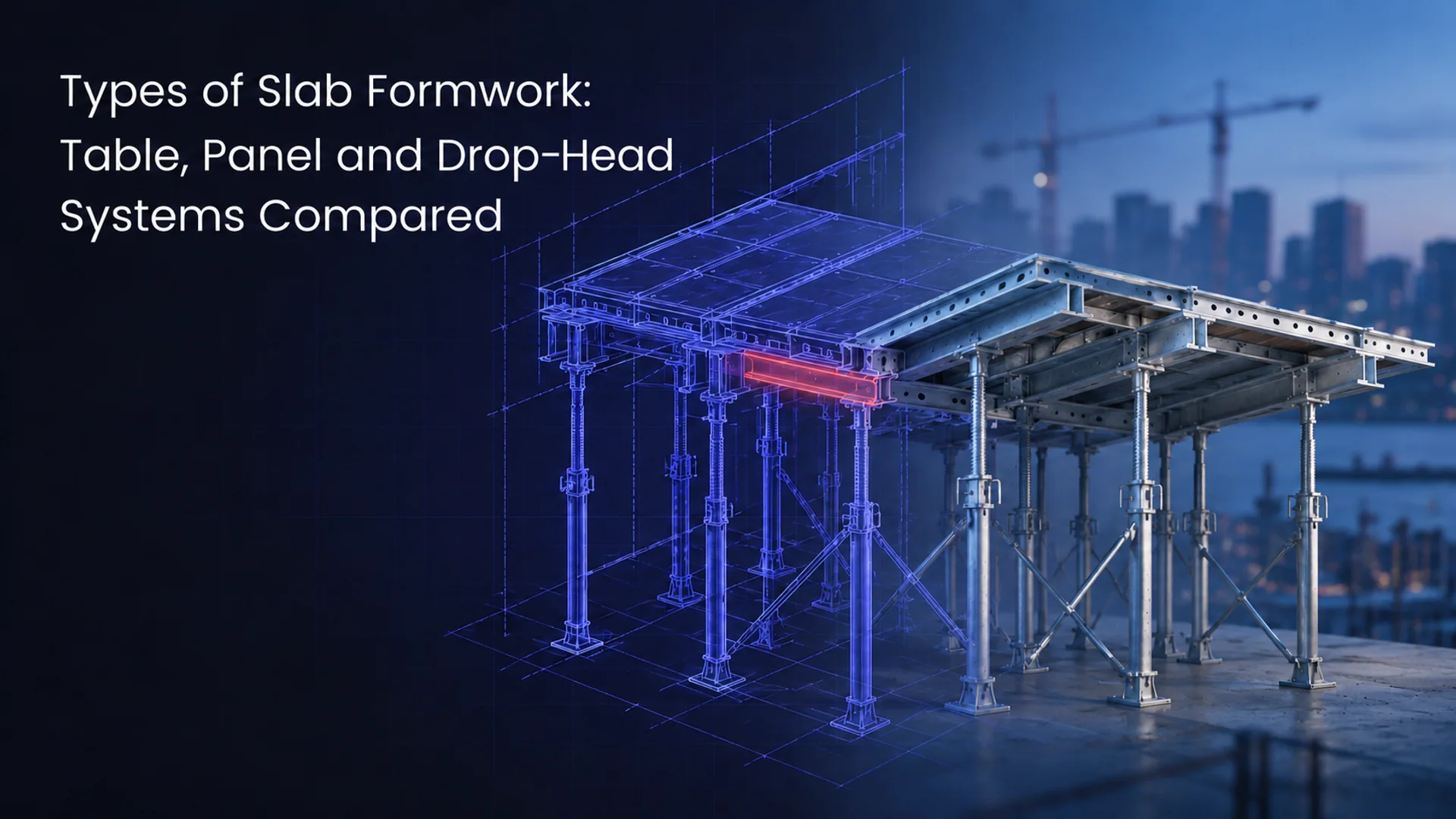
Striking is the one people forget. Props stay under a slab for days after the pour, so a fast floor cycle means several sets of props in circulation at once. Put that number in the inquiry.
Send those six with the drawing, and you get a real answer. A material name on its own just earns you questions back.
Where do drawing-specific steel profiles fit in modular formwork?
Strip a modular panel down and very little of it is the face. The sheet runs a few millimeters thick. It gets replaced when it wears out.
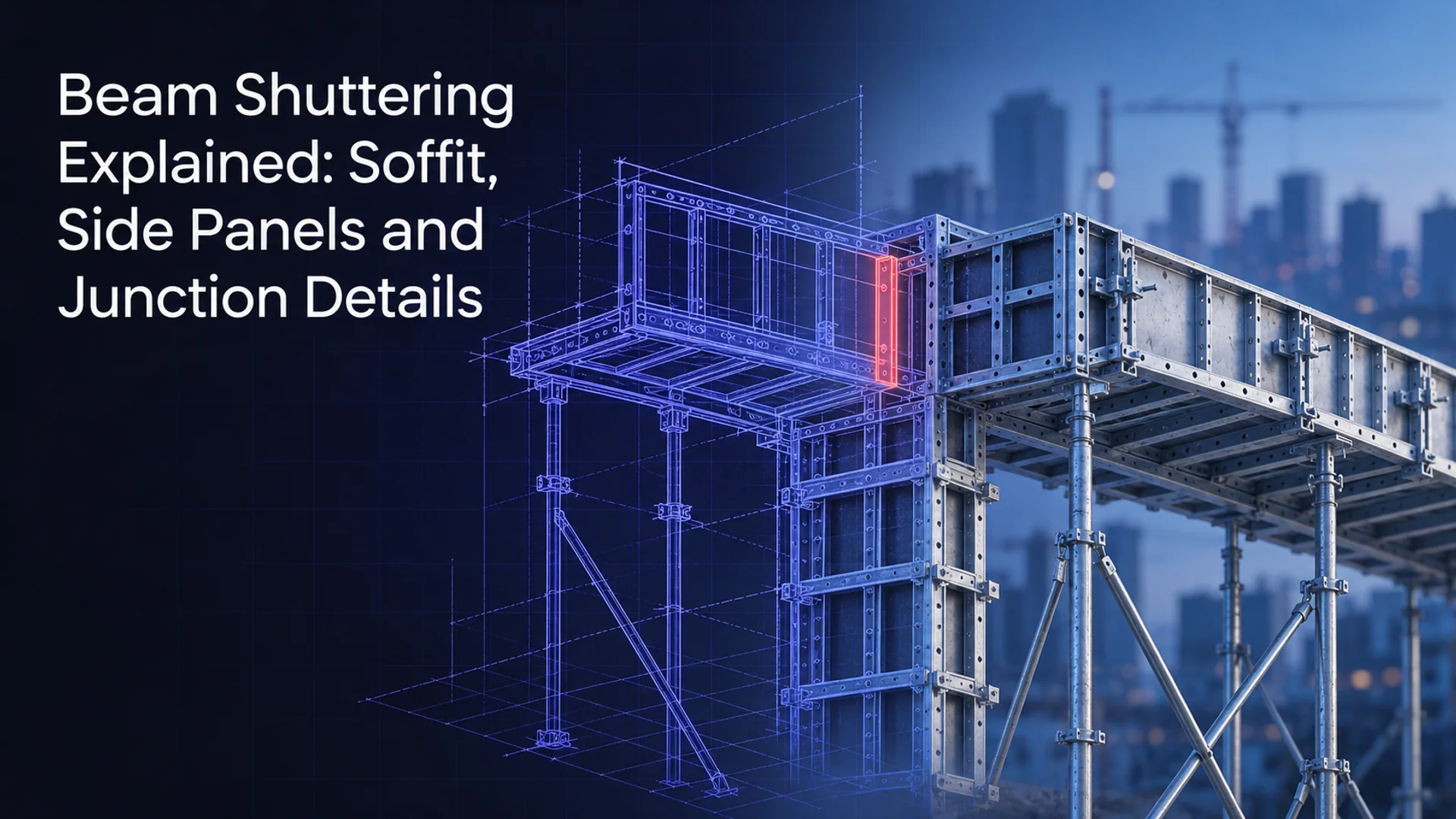
Everything else is cold-rolled formed steel profile around the edge, and those profiles give the panel its stiffness, its tie positions, and its clamp geometry.
They are drawing-specific. One profile belongs to one system and will not swap into another. Tie spacing and clamp interface are different on every system.
This is the part an OEM buys again and again. The system family gets chosen once. The profile carrying it gets reordered on every batch, so OEM formwork components become a repeat supply question.
Consistency carries that relationship, and a few millimeters of section drift means a panel that will not clamp square to the one beside it on the same wall.
Mother India Forming Pvt. Ltd. makes exactly this part. The formwork profiles and stiffeners sit in the heavy-duty structural sections range. Each is cold-rolled and formed to your approved drawing in medium- and high-tensile steel, galvanized, and ready to fit into slab, wall, or column assemblies. We develop tooling in-house for your section, and a line is dedicated to your order quantity.
Still weighing a system family against a face material? Send MIF the approved section, the steel grade, and the forecast quantity. You get a feasibility view of the profile before committing to any tooling. Request a free feasibility report.
Frequently asked questions about formwork types.
What is formwork in RCC?
It is the mold that holds wet concrete and the steel reinforcement in place. Concrete arrives as a liquid, so the formwork gives it shape and holds it there until it can stand on its own. Then the formwork comes off and gets used again.
What is basic formwork?
Sheet material cut on site and braced with timber or steel members behind it. A carpenter builds it to suit the shape in front of them, so nothing about it is standard. That makes it the usual choice on small jobs and one-off shapes.
How many types of shuttering are there?
There is no fixed number, because the question covers two separate lists. Face materials come down to three in common use. Timber, steel sheet, plastic. System families run to five or more. Any list of twelve or fourteen has merged the two.
Is steel formwork the same as a steel supporting frame?
No. Steel formwork usually means the steel face sheet touching the concrete, which is judged on flatness. A steel supporting frame is the structure behind it carrying load to the ground, which is judged on stability. A drawing should say which one it means.
What is modular formwork made from?
A face sheet with a perimeter of cold-rolled formed steel profiles. The sheet can be plywood, steel, or composite. The profiles set the edge stiffness, the tie hole positions, and the clamp interface. All three are made to the section the system owner approved.
What does an OEM need to send for a formwork profile quotation?
Four things. The approved drawing with section and length, steel grade and coating, your tolerance on section and straightness, plus the forecast annual quantity. Those four settle the tooling, the line allocation, and the lead time. Without the drawing, any quote is a guess.